Buffers
Buffers are crucial safety protection devices in lifting machinery, primarily installed on track-running equipment. Their core function is to absorb the impact force generated during equipment operation, reducing damage and ensuring safe operation. National regulations govern the manufacture and use of buffers. Commonly used crane buffers in China are mainly divided into two categories: energy-storing and energy-dissipating. Different types of buffers vary in materials and structure, resulting in different application ranges and operating environments, broadly adaptable to the safety protection needs of various lifting equipment.
Product Description
Buffers are core safety components of the crane equipment track-running system, used to absorb impact forces and protect the equipment. Specific details regarding their type, structure, and application are as follows:
Core Positioning
A safety protection device for lifting machinery, installed on track-running equipment. Its core function is to absorb the impact force generated during equipment operation, reducing damage caused by impacts and ensuring safe operation.
Industry Standards
National regulations and restrictions govern the manufacture and use of buffers, ensuring their safety performance meets the operational requirements of lifting equipment.
General Classification
Crane buffers commonly used in China are broadly classified into two categories: energy-storing buffers and energy-dissipating buffers. These two types differ in structure and are suitable for different scenarios.
Energy-Storing Buffers
These are divided into spring buffers and rubber buffers. Their core function is to absorb impact energy through energy storage, making them suitable for cranes operating at specific speeds.
Energy-Dissipating Buffers
These are divided into polyurethane buffers, hydraulic buffers, ZL composite buffers, and elastic damping body buffers. Their core function is to absorb impact force by dissipating energy, making them suitable for various complex scenarios.
Rubber Buffers
These have a simple construction and absorb relatively little energy. They are typically suitable for cranes operating at speeds not exceeding 50 m/min, primarily serving a blocking function.
Polyurethane Buffer
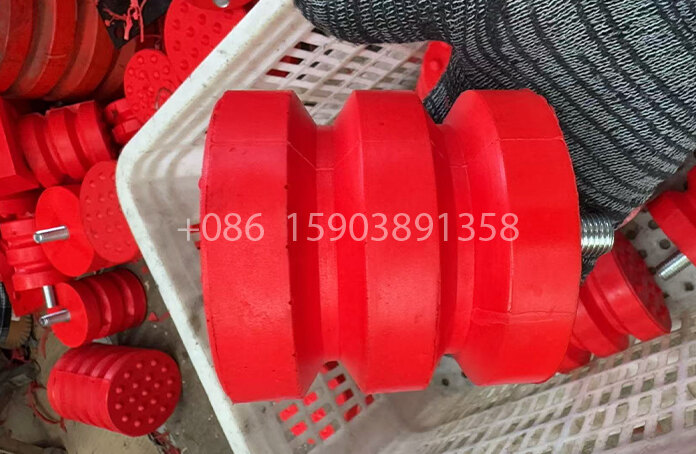
Made of polyurethane foam, it absorbs a large amount of energy, has excellent cushioning performance, and is resistant to oil, aging, acid and corrosion, high and low temperatures, and is insulating and explosion-proof. It has low density, is lightweight, simple in structure, inexpensive, produces no noise or sparks, is easy to install and maintain, and has a long service life. It can replace rubber and spring buffers and is particularly suitable for explosion-proof environments, widely used internationally.
Spring Buffer
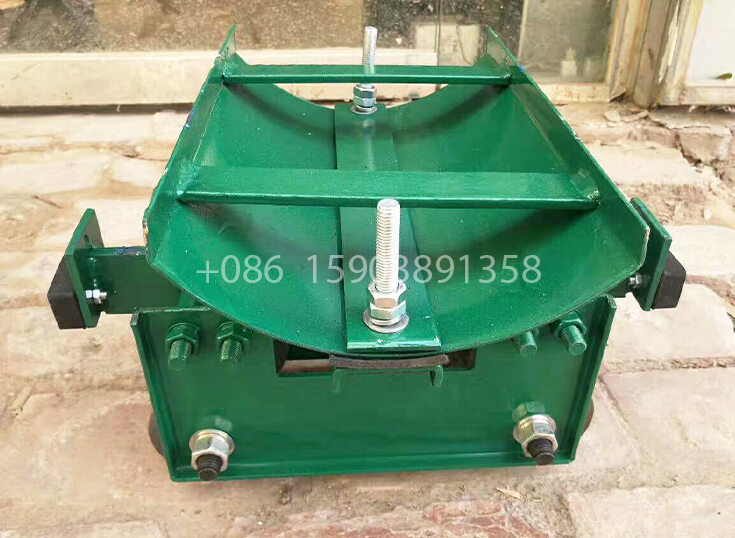
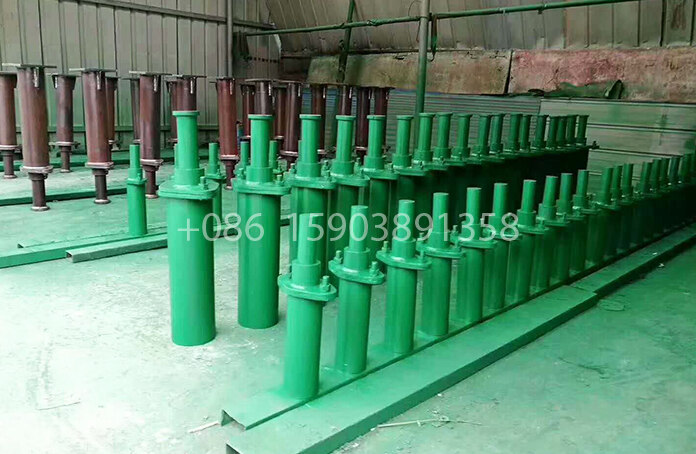
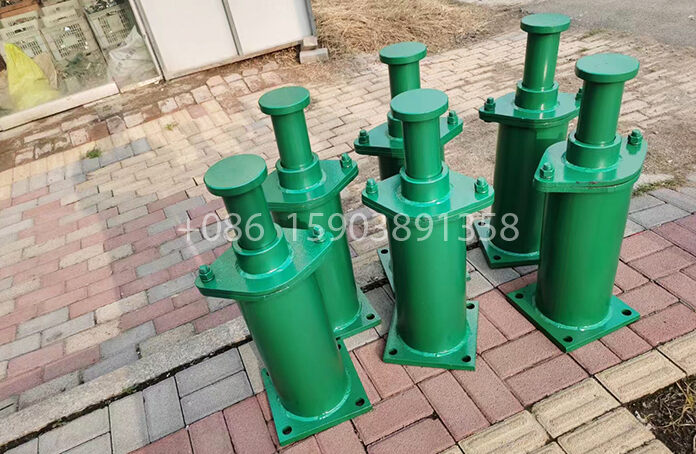
Mainly composed of a bumper, spring, and shell, it has a simple structure and is safe and reliable in use. When lifting equipment collides with the buffer, the impact energy is mainly converted into the compression energy of the spring. The improved spring-stopping structure can prevent rebound force.
Hydraulic Buffer
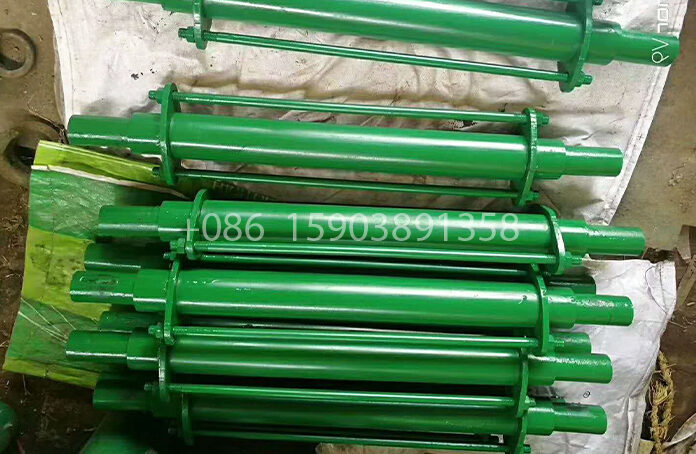
The working chamber is equipped with a return spring, push rod, and hydraulic oil. When subjected to impact pressure, the kinetic energy is transferred to the piston through the plug and acceleration spring. The piston squeezes the hydraulic oil, compressing the return spring, and the hydraulic oil is squeezed from the annular gap into the oil storage chamber. It can absorb more energy, has no rebound, and can eliminate operating noise.
Hydraulic-Pneumatic Buffers
An improved product of hydraulic buffers, these are among the best-performing buffers, outperforming hydraulic buffers in all aspects. Through comprehensive optimization, they represent a major development trend in the buffer industry.
Compatibility Differences
Due to differences in materials and structures, various buffers have different application ranges and operating environments. The appropriate type must be selected based on the operating speed of the lifting equipment, the working environment, and explosion-proof requirements.
Product Feature
Strong Safety Protection
As a safety protection device for lifting equipment, its core function is to absorb impact force, effectively reducing damage to the equipment and ensuring safe operation, complying with strict national manufacturing and usage standards.
Clear Classification and Strong Adaptability
Divided into two main categories: energy storage and energy dissipation types. Each category includes various structural forms, allowing flexible selection based on the operating speed and working environment of the lifting equipment, adapting to different scenario requirements.
Rubber Buffer Characteristics
Simple construction, low cost, primarily serving a blocking function; the disadvantage is relatively low energy absorption, suitable only for lifting equipment with operating speeds not exceeding 50m/min.
Polyurethane Buffer Features
High energy absorption, excellent buffering performance, oil and aging resistance, acid and alkali corrosion resistance, high and low temperature resistance, insulating and explosion-proof, low density, lightweight, simple structure, low price, noiseless and spark-free, convenient installation and maintenance, long service life, can replace rubber and spring buffers, and is highly adaptable to explosion-proof environments.
Spring Buffer Features
Simple structure, composed of a bumper, spring, and shell, safe and reliable in use; impact energy is converted into spring compression energy, and improved models with a spring-stopping structure prevent rebound force.
Hydraulic Buffer Features
Can absorb greater impact energy, no rebound phenomenon, effectively eliminates noise during operation, stable operation, and good protective effect.
Hydraulic-Pneumatic Buffer Features
As an improved product of hydraulic buffers, it has the best overall performance, with optimized design in all aspects, and represents the development trend of the buffer industry.
Wide Application
Adaptable to various rail-operated lifting equipment, covering the lifting safety protection needs of different industries and working environments.
Wheel Assembly Materials
Main Materials of the Product
1. Rubber Buffer: The core material is high-quality rubber, possessing certain elasticity and cushioning performance. It has a simple structure, low material cost, and can meet basic blocking and cushioning requirements, suitable for low-speed operating scenarios.
2. Polyurethane Buffer: The core material is polyurethane foam, which possesses good elasticity, oil resistance, aging resistance, and acid and alkali corrosion resistance. It is also insulating and explosion-proof, with low density and light weight, making it a core material that balances performance and economy.
3. Spring Buffer: The impact head is made of wear-resistant alloy steel or high-quality steel, possessing impact resistance and wear resistance; the spring is made of high-strength spring steel, heat-treated, with good elasticity and strong load-bearing capacity, effectively storing and releasing impact energy; the shell is made of high-quality carbon structural steel (mostly Q235B), with a stable structure protecting internal components.
4. Hydraulic Buffer: The piston, plug, and push rod are made of high-strength alloy steel, precision machined, wear-resistant, and impact-resistant, ensuring smooth transmission. The working chamber shell is made of high-quality steel, providing excellent sealing performance. It is filled with special hydraulic oil of moderate viscosity, effectively transmitting and absorbing impact energy. The return spring is made of high-strength spring steel, ensuring smooth reset after buffering.
5. Hydraulic-Pneumatic Buffer: The main structure is made of high-strength alloy steel, precision machined, providing higher impact resistance and stability. It combines hydraulic oil and inert gas internally. The hydraulic oil is a special type suitable for low and high temperature environments, and the inert gas provides excellent sealing performance, further optimizing the buffering effect. The materials of all components are superior to traditional hydraulic buffers.
6. General Auxiliary Components: Connectors and fasteners for various buffers are made of high-strength carbon steel or stainless steel, rust-proof and corrosion-resistant, ensuring a firm connection. Seals are made of oil-resistant and high-temperature-resistant high-quality rubber or polyurethane, ensuring sealing performance and extending equipment lifespan.