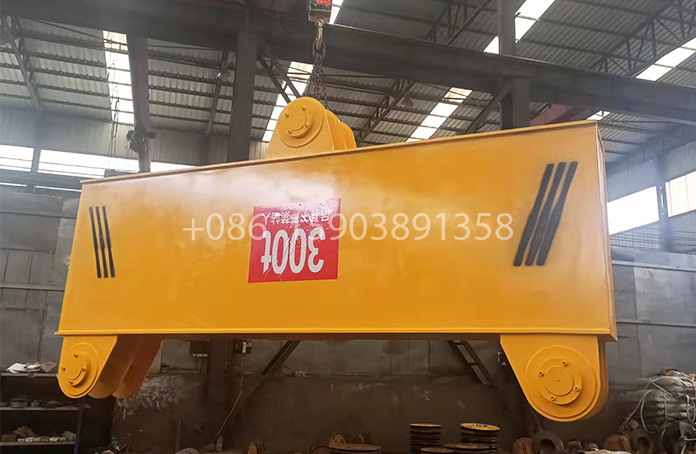
Custom Lifting Beams
Lifting beams and magnetic lifting tools are commonly used specialized auxiliary tools in lifting operations, widely applied in various lifting scenarios such as steel mills, machine shops, ports, and storage yards. Lifting beams, as specialized horizontal beam lifting tools, are primarily used for the stable lifting of loads, ensuring lifting safety. Magnetic lifting tools rely on strong magnetic fields to attract and lift heavy metal objects. They come in two types: permanent magnet and electromagnetic. They are easy to operate and highly adaptable. Together, they provide safe and efficient solutions for lifting operations of different scenarios and types of materials.
Product Description
This section summarizes two common lifting tools: lifting beams (including load-bearing beams and connecting rigging) and magnetic lifting tools (including permanent magnet and electromagnetic lifting tools). Both comply with relevant industry standards, and their structural design is tailored to the needs of lifting operations, adapting to different weights and types of lifting scenarios. They are indispensable auxiliary equipment in lifting operations.
Lifting Beam Core Structure and Principle
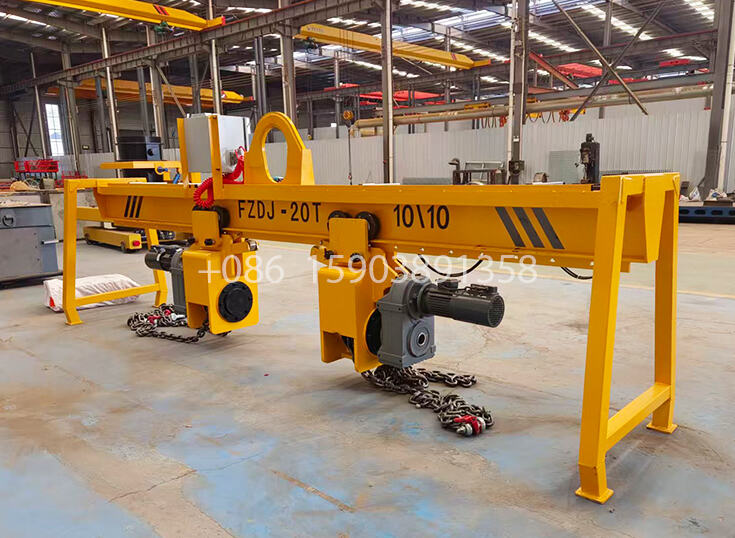
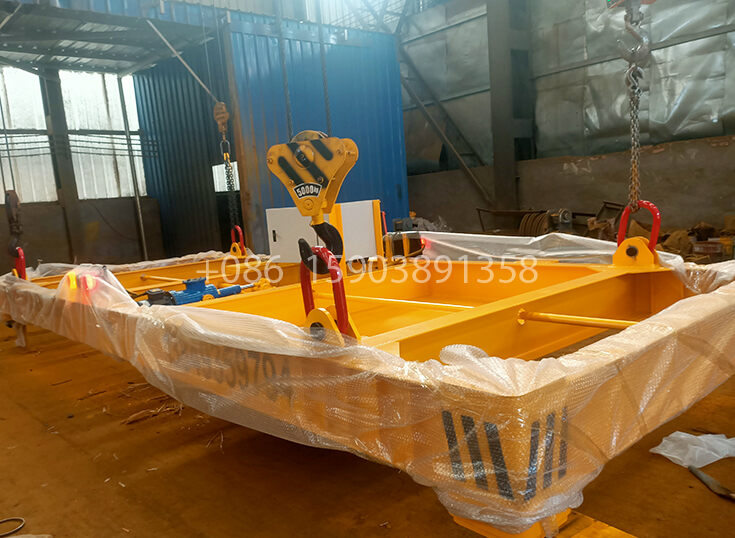
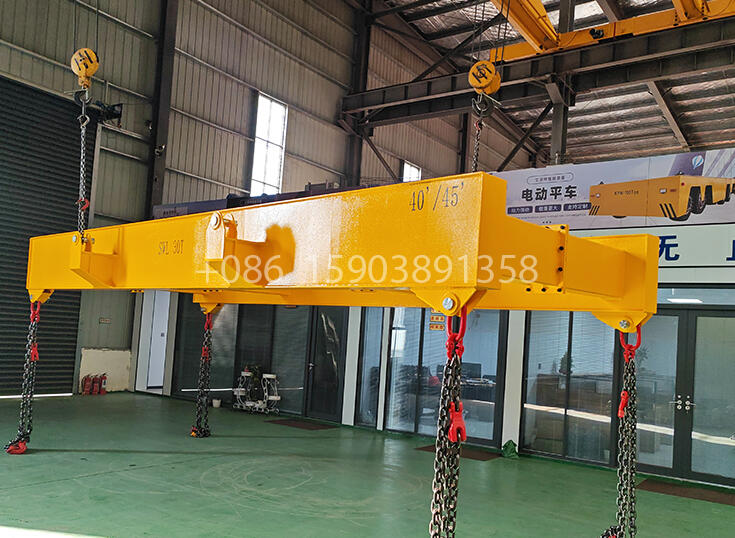
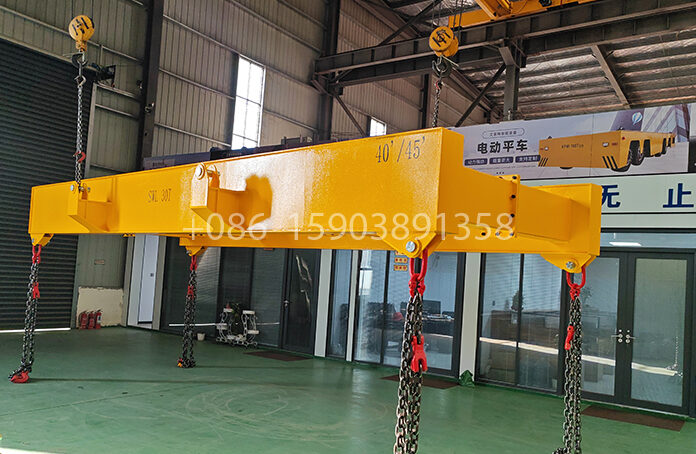
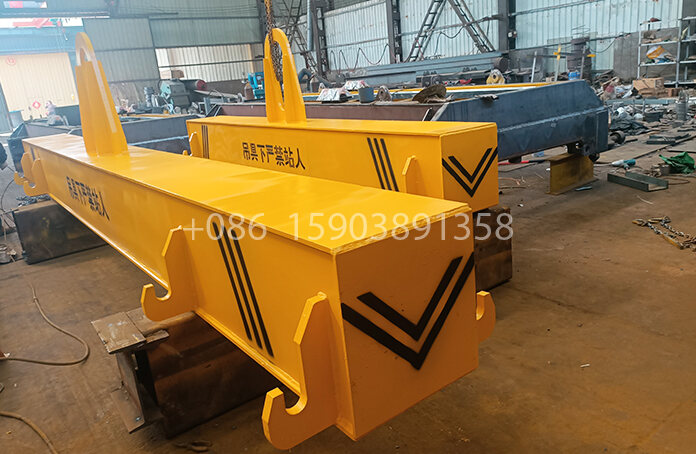
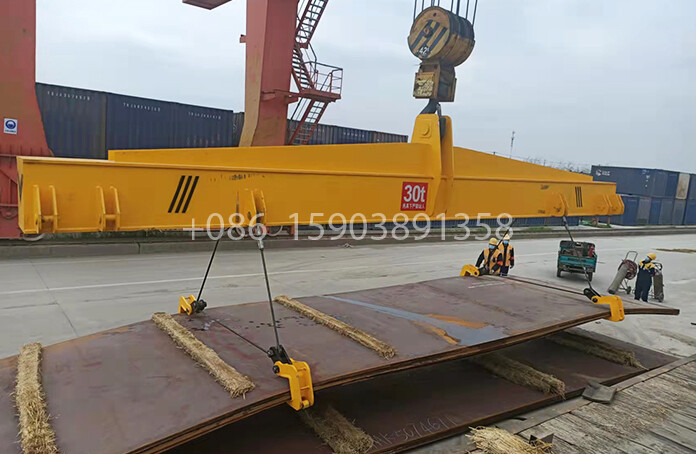
The lifting beam is a specialized horizontal beam lifting device for hoisting objects. It mainly consists of a main load-bearing beam and connecting rigging. The main load-bearing beam is the core load-bearing component, with a safety factor of 4. It has lifting rings at the top for direct connection to the overhead crane hook, and lifting lugs at both ends to connect the load-bearing beam to the object being lifted (such as a ballast bar). By distributing the load, it achieves stable and safe hoisting of the object, conforming to JB/T5000.1-5000.15-1998 General Technical Conditions for Heavy Machinery.
Magnetic Lifting Device Core Structure and Principle
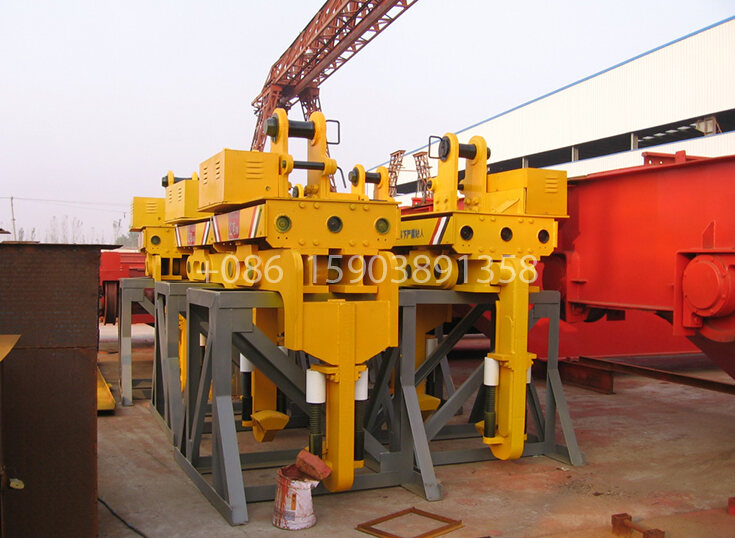
Utilizing a strong magnetic field as the core attraction force, it employs high-performance neodymium iron boron magnets as the magnetic source, combined with steel to form a strong magnetic system. Depending on the magnetic source, it is divided into permanent magnet lifting devices and electromagnetic lifting devices. Permanent magnet lifting devices rely on persistent magnetic force to attract heavy objects and do not require an external power source. Electromagnetic lifting devices generate a magnetic field through electromagnetic coils, requiring an external power source. The magnetic force can be adjusted to achieve rapid attraction and release of heavy objects.
Applicable Scenarios
Lifting beams are suitable for the stable lifting of various objects, especially suitable for scenarios requiring distributed loads and avoiding uneven stress on the object. Magnetic lifting devices are widely used in steel mills, machine shops, and other occasions requiring the lifting of metal materials. Permanent magnet lifting devices are suitable for scenarios involving frequent movement of heavy metal objects, while electromagnetic lifting devices are suitable for lifting metal materials of different weights and shapes.
Core Functions
Lifting beams ensure the safe lifting of objects, with a flexible structure and convenient use, ensuring a stable and sway-free lifting process. Magnetic lifting devices achieve the attraction and lifting of heavy metal objects, with simple operation and effective reduction of labor costs. Electromagnetic lifting devices allow for adjustable magnetic force and rapid release of heavy objects, improving work efficiency.
Product Feature
Simple and Reasonable Structure
Composed of a main load-bearing beam and connecting rigging, the structural design is simple, without complex components, facilitating installation, operation, and maintenance.
Flexible and easy to use
The overall design of the lifting beam is lightweight and can flexibly adapt to the connection requirements of different loads. The operation process is simple and requires no complicated training to operate.
Safe and reliable lifting
It meets national mechanical industry standards, with a main load-bearing beam safety factor of 4, stable load-bearing capacity, and can effectively distribute the load of the load, avoiding lifting hazards caused by uneven local stress.
Strong adaptability
It can be directly connected to the overhead crane hook and is adapted to different types of loads through the lifting lugs at both ends. It is widely used in various lifting scenarios and is suitable for lifting various specifications of loads.
Strong adsorption force and stable lifting
It adopts a high-performance neodymium iron boron magnetic source, combined with a strong magnetic system design, with strong adsorption force, which can stably adsorb various heavy metal objects and prevent the heavy objects from falling off during the lifting process.
Simple operation and labor saving
There is no need for complicated hook and binding procedures. The heavy objects can be lifted by magnetic adsorption, which greatly reduces labor input and lowers the operation threshold.
Clear Classification and Wide Adaptability
Divided into permanent magnet and electromagnetic types, permanent magnet lifting devices require no power supply and have sustained magnetic force, suitable for scenarios involving frequent movement of heavy metal objects; electromagnetic lifting devices have adjustable magnetic force, adaptable to metal materials of different weights and shapes, and can quickly release heavy objects.
High Safety
Stable adsorption reduces the risk of heavy objects falling off, and the simple operation process minimizes safety hazards caused by human error, making it suitable for high-intensity lifting operations.
Wheel Assembly Materials
Lifting Beam Material
1. Main Load-Bearing Lifting Beam Material: Made of high-strength structural steel, primarily Q355B or Q355D low-alloy high-strength steel, with Q460 high-strength steel used in some heavy-load scenarios. It possesses excellent bending, torsional, and fatigue resistance, strong load-bearing capacity, and meets industry safety standards.
2. Connecting Rigging and Lifting Lug Material: The lifting lugs are made of high-strength alloy steel, heat-treated for excellent shear and impact resistance; the connecting rigging uses high-strength steel wire rope or alloy steel chain, with strong wear resistance and tensile strength, ensuring a firm connection and preventing breakage.
3. Lifting Ring Material: High-strength alloy steel is selected, heat-treated for good tensile strength and load-bearing capacity, allowing for direct and stable connection to the overhead crane hook, ensuring lifting safety.
Magnetic Lifting Device Material
1. Magnetic Source Material: The core uses high-performance neodymium iron boron permanent magnet material, providing strong and durable magnetic force. This is the core material for generating the attraction force of the magnetic lifting device, suitable for lifting requirements of varying strengths.
2. Frame and Shell Material: High-strength steel is used, treated for corrosion resistance and wear resistance, possessing good rigidity and deformation resistance, protecting the internal magnetic source and electrical components (electromagnetic lifting device), and extending service life.
3. Special Materials for Electromagnetic Lifting Gear: The electromagnetic coil uses high-conductivity copper wire, and the insulation layer uses high-temperature resistant and wear-resistant insulating materials to ensure stable magnetic field generation after energization. Electrical control components use high-protection-level elements, and the outer shell is made of waterproof and dustproof materials to ensure stable operation of the electrical system.
4. Protective Materials: The surface is treated with shot blasting for rust removal, epoxy zinc-rich primer, and polyurethane topcoat, providing excellent corrosion and wear resistance, suitable for harsh lifting environments such as open-air, dusty, and humid conditions.