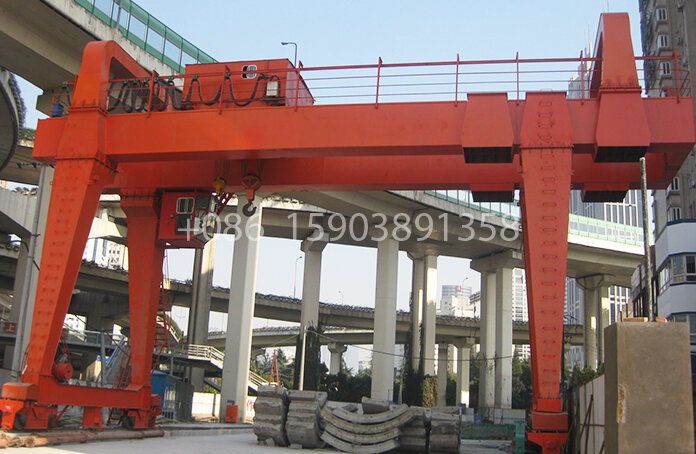
Double Girder Gantry Cranes
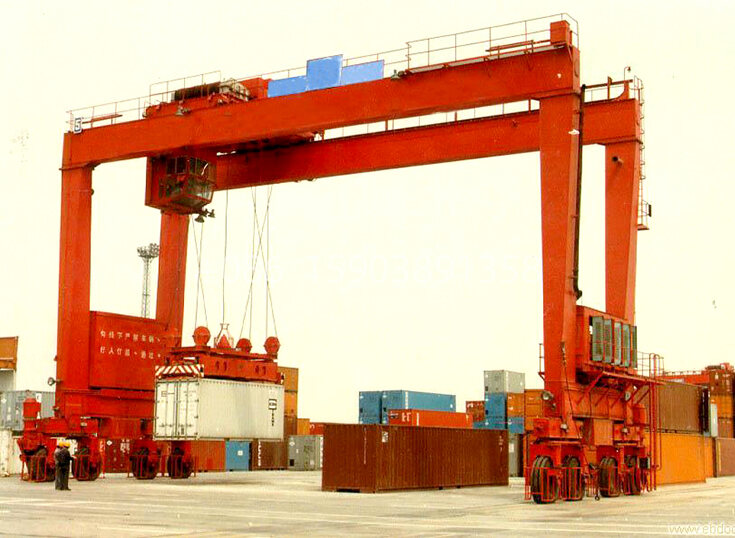
Double girder gantry cranes are heavy-duty lifting equipment widely used in ports, docks, freight yards, logistics centers, and other industrial sites. Their core structure consists of two parallel main beams connected by end beams to form a rigid frame, resulting in a stable structure and high load-bearing capacity. Various lifting mechanisms and specialized lifting tools can be configured according to the specific needs of each scenario. They combine safety, adaptability, and intelligence, meeting the material lifting, loading, unloading, and movement requirements of different tonnages and working conditions. They are core lifting equipment in industrial production and logistics transportation.
Product Description
Overall Structure
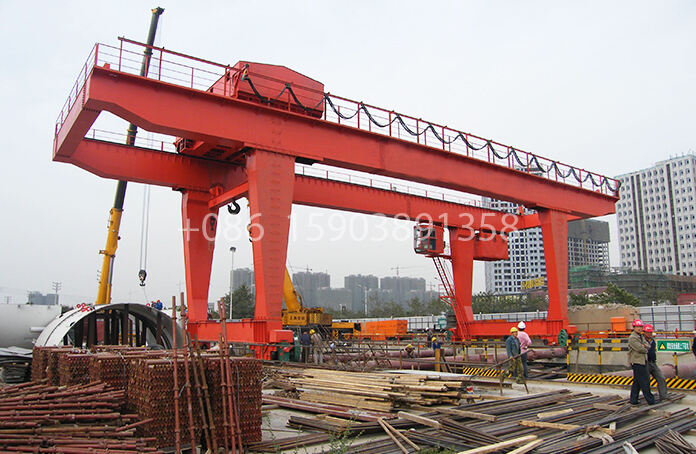
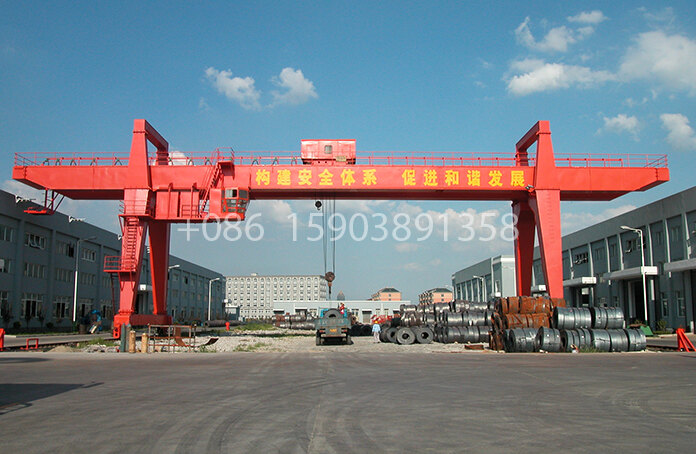
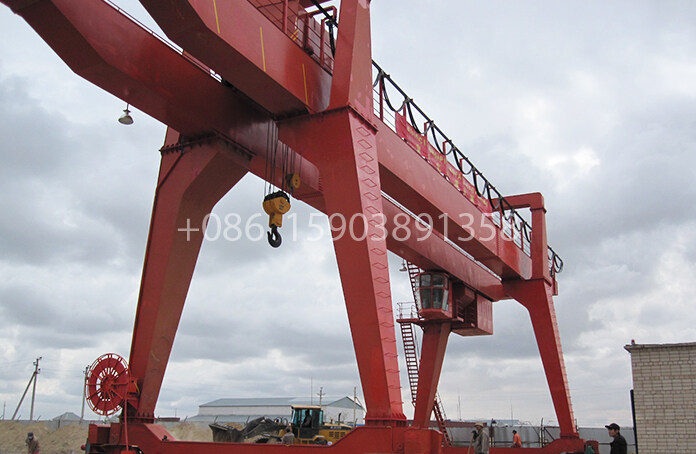
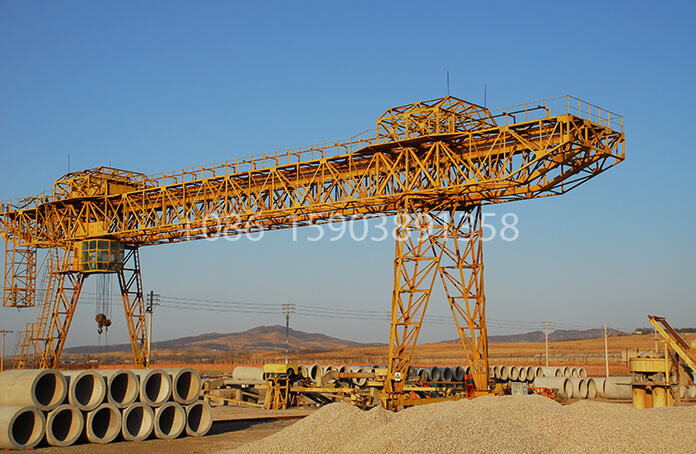
Utilizing two parallel main beams connected by end beams to form a rigid frame, significantly improving structural stability and load-bearing capacity. The main beams are available in two main structures: box girder and truss girder. The legs are available in rigid and flexible configurations. The overall design is modular and standardized, facilitating transportation, installation, and subsequent maintenance.
Operation and Lifting Performance
Multiple lifting mechanisms (such as main hook and auxiliary hook) can be configured to lift goods of different tonnages in stages. The lifting mechanisms mostly use variable frequency speed control or dual-speed motors, and the trolley and main trolley traveling mechanisms are independently driven, ensuring smooth movement. The span can reach over 30 meters, with some models exceeding 100 meters. The main beam can be designed as cantilever or non-cantilever, effectively reducing blind spots.
Safety and Protection Configuration
Equipped with multiple safety protection devices, including overload protection, limit protection, and anti-collision systems. Key structures are scientifically designed and tested, and the electrical system uses high-protection-level components, possessing comprehensive electrical protection functions, and can adapt to harsh working environments such as open fields and dusty areas.
Intelligence and Adaptability
Automated control can be achieved through PLC or industrial computers, supporting remote monitoring, fault diagnosis, and data recording. Some high-end models have automatic positioning and anti-sway functions. Specialized lifting tools such as grab buckets, electromagnetic chucks, and container spreaders can be customized according to user needs to adapt to the lifting of different types of materials.
Specifications and Classifications
Classified by application and performance, they are available in various types, including general-purpose, light-duty, portal-type, and explosion-proof. Different types have clear distinctions in load-bearing capacity, span, and working level, precisely adaptable to different scenarios such as warehouses, ports, and explosion-proof environments.
Product Feature
Scientific Structural Design and Strong Stability
Utilizing a rigid frame structure with double main beams and end beams, the main beams can be either box girder (high bending strength, suitable for heavy loads) or truss beam (lightweight, low wind resistance, suitable for large spans and open-air environments). The legs are available in rigid and flexible types; rigid legs bear the main load, while flexible legs can adapt to uneven tracks or thermal expansion and contraction. The modular and standardized design facilitates transportation, installation, and maintenance.
Superior performance, suitable for heavy loads and large spans
Multiple lifting mechanisms can be configured for segmented lifting; the lifting and traveling mechanisms employ efficient drive methods for smooth movement; a wide span coverage (over 30 meters, exceeding 100 meters), and the cantilever design reduces blind spots, meeting the needs of heavy-duty and large-span lifting.
Comprehensive safety protection and high reliability
Equipped with multiple protection devices including overload, limit, and anti-collision; the main beam undergoes high-coefficient design and finite element analysis, exhibiting excellent torsional and fatigue resistance; critical welds undergo non-destructive testing; electrical components have a protection level of no less than IP54, with overcurrent, overvoltage, and phase loss protection to ensure operational safety.
High degree of intelligence, enabling automated operation
Automated control is achieved through PLC or industrial computers, supporting remote monitoring, fault diagnosis, and data recording; some high-end models feature automatic positioning and anti-sway functions, and can be linked with AGVs and RFID systems to achieve fully automated cargo handling, improving operational accuracy and efficiency.
High adaptability and customizable to various scenarios
Customized lifting tools can be tailored to user needs, adapting to different types of materials; equipped with windproof and corrosion-resistant devices to withstand harsh environments; energy-saving and low-noise design reduces energy consumption and environmental impact.
Convenient maintenance and strong scalability
A maintenance platform is installed on the main beam, key lubrication points are centrally located, and the modular design facilitates the replacement of components such as wire ropes and wheel sets; the design reserves space for future expansion, allowing for functional upgrades as needed.
Wheel Assembly Materials
Main Material Specifications
1. Main Beam and End Beam Materials: Both the main beam (box beam, truss beam) and end beams are made of high-strength structural steel, primarily Q355B or Q355D low-alloy high-strength steel, with some heavy-duty models using Q460 steel. These materials possess excellent bending, torsional, and fatigue resistance, capable of withstanding heavy loads and long-term operational wear.
2. Outrigger Material: Made of the same material as the main beam, using Q355 series low-alloy high-strength steel. Rigid outriggers are welded from thickened plates, while flexible outriggers are equipped with elastic connectors, ensuring structural stability and a certain degree of deformation adaptability, guaranteeing overall load-bearing safety.
3. Lifting Mechanism Material: Core components such as hooks, chains, and wire ropes are made of high-strength alloy steel. The hook undergoes heat treatment, possessing excellent tensile strength, wear resistance, and impact resistance. Pulleys are made of wear-resistant steel, and bearings are high-temperature resistant, heavy-duty special bearings, extending service life.
4. Protective and Electrical Materials: The equipment surface undergoes shot blasting for rust removal + epoxy zinc-rich primer + polyurethane topcoat treatment, providing excellent corrosion resistance and wind and sand resistance, suitable for harsh environments such as open-air and coastal areas. Electrical components are selected with IP54 or higher protection ratings, and the outer casing uses waterproof, dustproof, and explosion-proof materials (dedicated to explosion-proof models) to ensure stable operation of the electrical system.