Manual Gantry Cranes
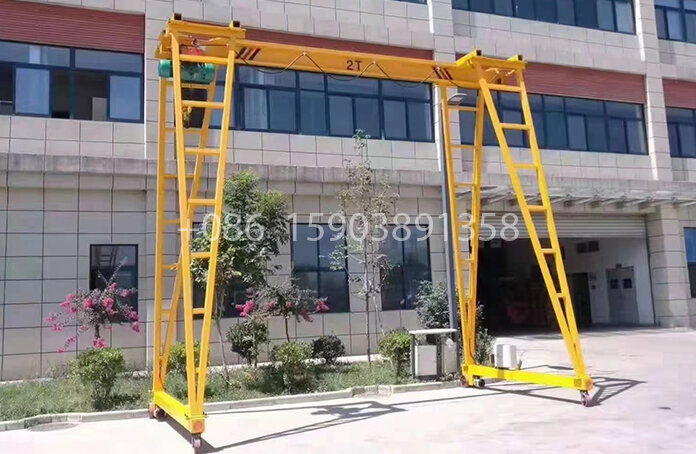
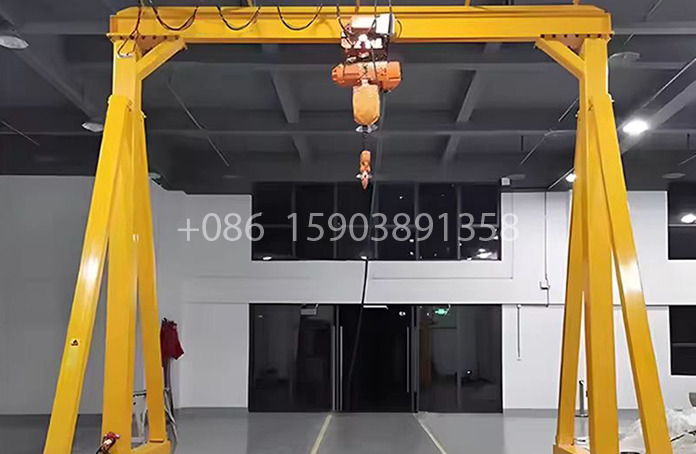
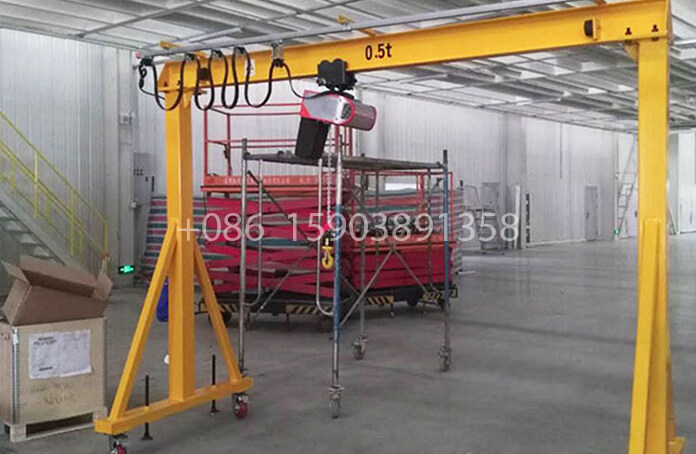
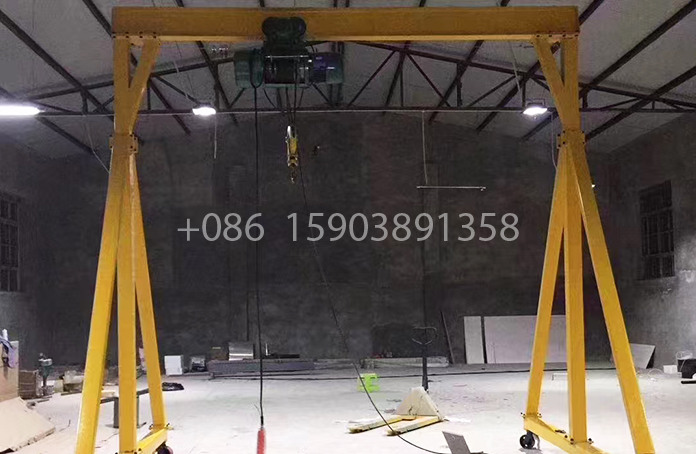
Hand-push gantry cranes, often referred to as small gantry cranes or manual gantry cranes, are simple in structure and easy to operate. They combine the basic structural features of gantry cranes but with a more compact design. Requiring no complex electrical control systems, they rely on manual pushing for movement and manual lifting, making them suitable for use in environments with limited space. They are widely used in various light-duty lifting scenarios, providing convenient solutions for handling small goods and equipment maintenance.
Product Description
Overall Structure
Utilizing a gantry frame structure, consisting of two side legs and a top main beam. The legs support the main beam, forming a hollow passageway for vehicles and pedestrians to pass through without obstructing ground traffic. The structural design balances practicality and site adaptability.
Operation Mode
The core operation is manual. The trolley can be moved manually within a designated area (the original text mentions track-based movement, a feature of electric gantry cranes; hand-push cranes do not require tracks). The trolley can move laterally on the main beam, and the lifting mechanism drives the hook to lift and lower vertically, enabling multi-directional lifting.
Core Features
Compact structure, moderate weight; main beam optimized in shape and size, balancing strength, rigidity, and lightweight; low operational threshold, requiring no complex professional training; adaptable to various scenarios; can be specially modified according to the working environment.
Specification Adaptability
Wide lifting capacity coverage, mainly small models in the few tons, meeting the needs of light goods handling; also available in larger sizes for specific scenarios (correcting the original text's "hundreds of tons" inaccuracy; there is no hundred-ton model for push-type cranes; larger sizes are only suitable for medium and light lifting).
Product Feature
Rational Structure and High Practicality
Utilizes a tall portal frame structure; outriggers support the main beam to form a passageway, without affecting ground traffic; the main beam is mostly a box-type structure with good strength and rigidity, capable of withstanding the corresponding lifting capacity, and structural optimization reduces weight while ensuring performance.
Flexible Operating Range
Through a combination of trolley movement, lateral trolley movement, and vertical hook lifting and lowering, it can operate within a large rectangular space, covering multiple work points and facilitating the lifting of goods in different locations.
Wide Lifting Capacity Adaptability
The overall lifting capacity is relatively small, primarily for light lifting. Different specifications offer significantly different lifting capacities, ranging from small (a few tons) to medium-sized, allowing selection based on actual needs and adaptability to various light cargo handling scenarios.
Strong Environmental Adaptability
It can operate normally in indoor factories, warehouses, and open-air areas. Special modifications can be made for different environments—dustproof devices can be installed in dusty environments, and anti-corrosion materials and coatings can be used in coastal areas to resist corrosion and dust.
Simple and Easy to Operate
The operation process is simple, requiring no complex control system. Operators can quickly learn and easily control the movement of the trolley and lifting mechanism. For some suitable scenarios, operational convenience can be optimized to improve work efficiency.
Compact Structure and Good Space Adaptability
The compact design and moderate size make it suitable for use in space-constrained environments. It can flexibly maneuver in narrow areas, compensating for the shortcomings of large cranes, such as large space occupation and insufficient flexibility.
Wheel Assembly Materials
Main Materials
1. Main Beam Material: The core uses box-type structural steel, primarily Q235B or Q355B ordinary carbon structural steel, possessing good strength, rigidity, and weldability. It can withstand the corresponding lifting capacity, while achieving lightweight through structural optimization, balancing performance and ease of movement.
2. Outrigger Material: Made of the same material as the main beam, using Q235B or Q355B steel, welded and fixed to both sides of the main beam to ensure overall structural stability. This effectively supports the main beam and the lifted load, ensuring operational safety.
3.Lifting Mechanism Material: Core components such as the hook and chain are made of high-strength alloy steel, possessing good tensile strength and wear resistance, capable of withstanding lifting loads and preventing breakage and wear during use. Pulleys and other components are made of wear-resistant steel, extending service life.
4. Protective materials: For special environments, coatings with excellent anti-corrosion properties (such as epoxy zinc-rich primer and polyurethane topcoat) are used. For coastal and dusty environments, additional anti-corrosion and dustproof treatments can be optimized. Corrosion-resistant steel is selected to improve the weather resistance and service life of the equipment.